 by Helal
Does Direct Sunlight Affect Your Aircon? Sydney Guide
Yes, but probably less than you’ve been told. An outdoor unit sitting in direct afternoon sun runs a few percent less efficiently than a shaded one and warms up faster on hot days. Worth addressing if it’s easy to fix. Not worth panicking about, and not worth spending serious money on elaborate shading solutions.
Here’s what’s actually going on, what genuinely helps, and what’s overkill.
What direct sunlight does to the outdoor unit
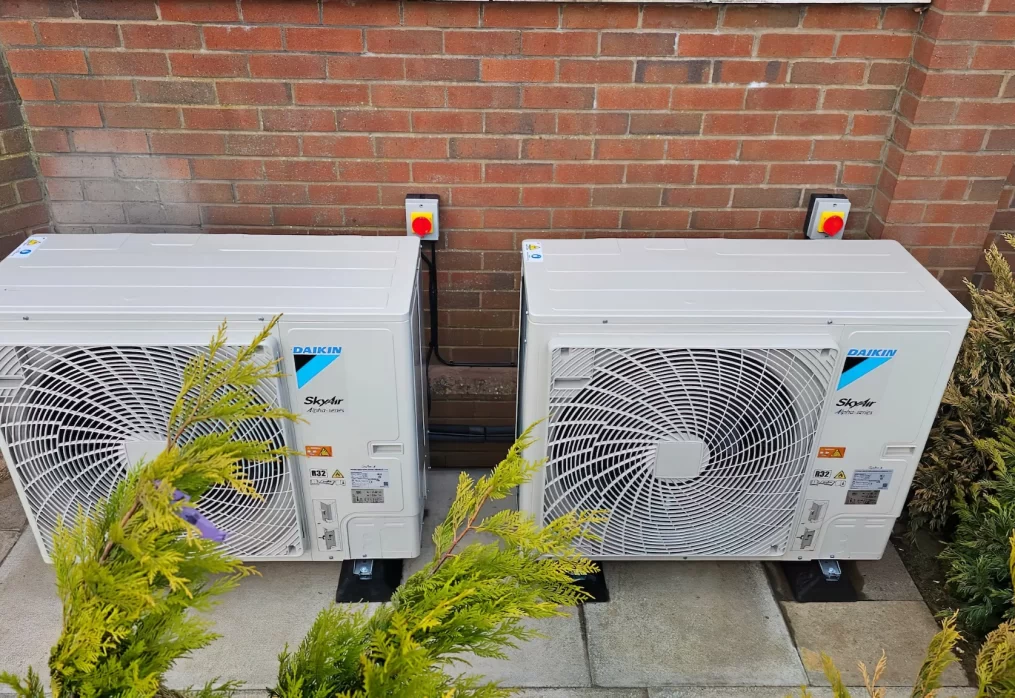
The outdoor condenser unit’s job is to dump heat from inside your house into the outside air. It does this by running refrigerant through coils, with a fan blowing outdoor air across them.
When the unit sits in direct sun, two things change. The casing and surrounding air heat up, which slightly raises the temperature the system has to push heat into. And the unit itself runs hotter, which marginally reduces efficiency. The compressor has to work fractionally harder to maintain the same indoor temperature.
The honest scale of the effect: around 2 to 5% efficiency loss on a unit sitting in full afternoon sun versus the same unit shaded. Real, measurable, but not dramatic. On a typical Sydney home running aircon for half the year, that’s $30 to $80 a year on the power bill.
Worth noting: modern aircon units are designed to handle direct sunlight as a normal operating condition. They don’t overheat or fail because the sun is on them. The efficiency hit is modest, not catastrophic.
Where direct sun matters more
A few situations where the effect is bigger than the average.
Western Sydney summer afternoons. Penrith, Liverpool, Campbelltown and similar suburbs regularly hit 40°C+ on hot days. An outdoor unit in direct sun in these conditions can reach surface temperatures of 60°C+, which pushes the system harder than coastal Sydney would.
Outdoor units mounted against a west or northwest-facing wall. These cop the worst of the late afternoon sun, which coincides with peak cooling demand. A unit against an east-facing wall is in shade by midday and the heat-of-the-day issue largely goes away.
Units sitting on dark concrete or paving. Dark surfaces absorb solar heat and radiate it back at the unit. A condenser sitting on dark pavers in full sun is operating in a hotter microclimate than one on grass or light-coloured concrete.
Units in confined spaces. A condenser tucked into a small alcove or against a fence with limited airflow has the sun problem plus a ventilation problem. Hot air gets recycled around the unit instead of dispersing.
What genuinely helps
The interventions that actually move the needle, in order of how much.
Move the unit to a shaded location. If you’re installing a new system, position the outdoor unit on the south or east side of the house where possible. South-facing in Australia gets the least direct sun, east-facing only catches morning sun before peak cooling demand.
Add an awning or simple roof over the unit. A small awning that shades the unit from above without restricting airflow on the sides is the most effective retrofit. Best practice is at least 30cm of clearance above the unit and full clearance on all sides.
Plant a tree or shrubs nearby (not too close). Natural shade works well, but the planting needs to be at least a metre from the unit on all sides so airflow isn’t restricted. Don’t plant directly behind the unit where leaves can fall into it.
Make sure the unit has proper clearance. This matters more than shading does. A metre of clear space around the unit, no plants growing into it, no leaves accumulating around the base. This is the single most important thing for outdoor unit performance, with or without sun exposure.
What doesn’t work, or isn’t worth bothering with
A few things that come up online but don’t actually help much.
Wrapping the unit in shade cloth that touches the casing. This restricts airflow and traps heat against the unit. Worse than direct sun.
Building a fully enclosed cover. Same problem. The outdoor unit needs to breathe. Fully enclosing it traps the heat the unit is trying to dump.
Spraying water on the unit. Old advice that hasn’t aged well. It can cause corrosion, particularly in coastal areas with salt in the air, and the efficiency improvement is minimal compared to just shading the unit properly.
Reflective foil wrapping. Marginal effect, and most reputable installers don’t recommend it. The unit’s casing is already designed to handle solar heat.
The general principle: anything that restricts airflow is worse than the sun problem you’re trying to solve. Shade above the unit is fine. Shade that wraps the unit isn’t.
When to actually act on this
Not all outdoor unit positions are worth retrofitting. The cost-benefit calculation:
Worth addressing: a unit on a west or northwest-facing wall in Western Sydney that runs hard through summer. A unit in a confined space without proper airflow. A unit on dark paving in full afternoon sun where adding a simple awning is straightforward.
Not worth addressing: a unit getting two or three hours of morning sun on the east side of the house. A unit in occasional dappled shade. A unit that’s working fine and not showing any performance issues.
If your aircon is performing well and not pushing the power bill higher than expected, the sun on the outdoor unit isn’t a problem worth fixing. If the system is struggling on hot days or running unusually hard, sun exposure is one of several things worth checking, alongside service overdue, refrigerant levels, and filter condition.
Frequently asked questions
Will direct sunlight damage my AC unit? No, modern outdoor units are designed to handle direct sun as part of normal operation. The casing, electronics and components all tolerate sun exposure. The efficiency hit is small.
Should I cover my outdoor unit when it’s not in use? Generally no. Covers can trap moisture, attract pests, and are easy to forget about when summer arrives. The unit is built to live outside year-round.
Does indoor sunlight affect cooling? Yes, more than outdoor sunlight does. Direct sun streaming through windows adds significant cooling load to the room. Window shading (curtains, external awnings, reflective film) makes a bigger difference to your power bill than shading the outdoor unit.
Will shading my outdoor unit really save money? A modest amount. On a typical Sydney home, $30 to $80 a year. Worth doing if the fix is cheap. Not worth spending hundreds on elaborate shading solutions to recover.