 by Helal
Choosing a Split System for a Bedroom or Small Room
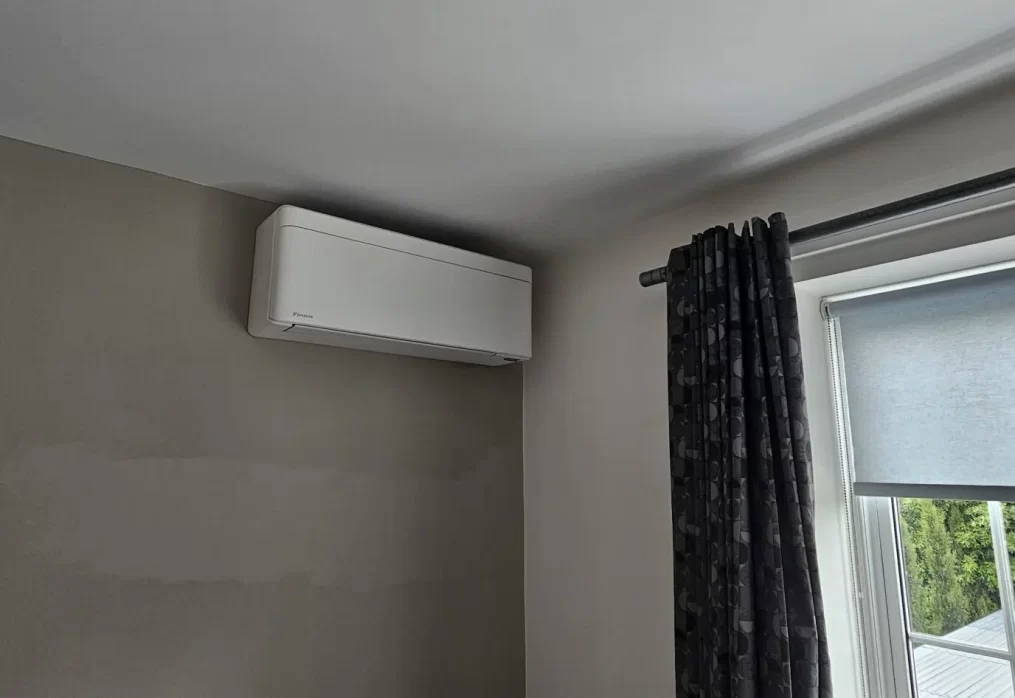
For a typical Sydney bedroom or small room, you need a 2.5kW split system. Slightly larger spaces, west-facing rooms, or rooms with significant glazing might push to 3.5kW. Going bigger than that is a common mistake that costs money to install and money to run.
The detail behind that, including the specific situations where you’d size up or down, is below. We install single-room splits across Sydney every week, so this is what we’d actually recommend at a quote visit.
Why size matters more in small rooms than people realise
The instinct most homeowners have is “bigger is safer” when sizing aircon for a room. The opposite is true.
An oversized split system in a small room cools the room quickly, hits the set temperature within ten minutes, switches off, then cycles back on five minutes later when the temperature drifts. That short-cycling pattern has three problems.
The system never runs long enough to dehumidify properly. The evaporator coil only gets cold enough to pull moisture out of the air after several minutes of continuous operation. A unit that runs in five-minute bursts leaves the room cold and clammy. This is the most common complaint we get on oversized splits in bedrooms.
The compressor and fan motor wear faster. Each on-off cycle is harder on the components than steady running. Oversized systems consistently fail earlier than properly sized ones.
The power bill is higher than a smaller system would deliver. Each compressor start draws significantly more current than steady running. Cycling on and off all night uses more power than running smoothly at lower output.
A correctly sized split runs longer cycles at lower output, dehumidifies properly, and uses less power doing it. Smaller is usually better for small rooms.
Sizing for typical Sydney rooms
Real numbers for the rooms most homeowners are sizing for.
Standard bedroom (10 to 14m²): 2.5kW split. Big enough to handle the room comfortably, small enough to run long cycles and dehumidify properly. This is the most common single-room install we do across Sydney.
Master bedroom (15 to 20m²): 2.5kW or 3.5kW depending on glazing and orientation. A standard rectangular master with one window tucked into the south or east side of the home: 2.5kW. A larger master with floor-to-ceiling glass or significant west-facing windows: 3.5kW.
Small study or nursery (8 to 12m²): 2.5kW. The temptation to fit a smaller unit (2.0kW) for a tiny room is rarely worth acting on. The price difference between 2.0kW and 2.5kW units is small, and 2.5kW gives you more capacity headroom for hot afternoons.
Granny flat or studio (20 to 30m²): 3.5kW for a standard layout, 5.0kW if it includes a kitchenette (cooking generates real heat load) or significant glazing.
Open-plan combined bedroom and living (25 to 35m²): 5.0kW typically. This is the upper end of what a single split can comfortably handle.
These figures assume average Sydney conditions: standard 2.4 to 2.7m ceilings, reasonable insulation, and one or two normal-sized windows. The next section covers what changes the calculation.
When to size up
Several factors push the right size up to the next bracket.
West or northwest-facing windows. These rooms cop the worst of the afternoon sun and run noticeably hotter than south or east-facing rooms. A west-facing bedroom that would normally take a 2.5kW often needs a 3.5kW.
Large windows or floor-to-ceiling glazing. Modern apartments and recent renovations often have significant glazing. Glass transfers heat far more than insulated walls. If 30%+ of the wall area is glass, size up.
Raked or high ceilings. Anything above 2.7m increases the air volume the system has to condition. A 14m² bedroom with a 3m raked ceiling needs more capacity than the same floor area with a flat 2.4m ceiling.
Western Sydney location. Liverpool, Penrith, Campbelltown and similar suburbs run 5 to 8°C hotter than the eastern beaches on the same day. Heat island effects in newer growth-corridor estates (Oran Park, Leppington, Box Hill) compound this further. A 2.5kW that would handle a bedroom in Coogee might struggle in Penrith on a 42°C afternoon.
Top-floor rooms in two-storey homes. The upper level of a two-storey home runs warmer than the lower level because heat rises and the roof cavity sits directly above. Top-floor bedrooms often need to size up one bracket.
Multiple occupants. A bedroom that sleeps two adults plus a child has a higher cooling load than a single-occupant bedroom. Each person adds roughly 100W of heat to the room.
When to size down
Less common, but worth mentioning.
Small, well-insulated, internal bedrooms in modern apartments or recent builds with full insulation, double glazing and no west-facing exposure: a 2.0kW can be enough.
Rooms used only briefly (a guest bedroom used twice a year): worth being honest with yourself about whether the room actually needs a dedicated split at all. Sometimes a portable solution or just a fan is the more sensible answer.
What to look for in a single-room split
A few specifics worth knowing when you’re comparing quotes.
Inverter compressor. Standard on all quality residential splits now. Some budget brands still sell non-inverter units. Avoid these. The efficiency difference is significant and the price difference is modest.
Star rating. The energy rating label gives both cooling and heating efficiency separately. Look at both numbers, not just one. A high-cooling-rating unit with mediocre heating performance is annoying through Sydney winters.
Quiet operation rating. Bedroom splits especially need quiet indoor units. Look for indoor unit noise levels under 25dB at low fan speed. Anything above 30dB is going to bother you trying to sleep.
Reverse-cycle. Worth confirming, though almost all residential splits sold in Australia are reverse-cycle (cooling and heating in one unit). Cooling-only splits exist but are uncommon and rarely the right call given Sydney winters do get cold.
Wi-Fi connectivity. Genuinely useful for bedroom installs. Pre-cooling a bedroom 20 minutes before bed on a hot night, or scheduling the unit to switch off at 5am, is the kind of feature you’ll use regularly once you have it.
The brands we install most often for residential splits are Daikin, Mitsubishi Electric, Fujitsu and Panasonic. All four offer reliable units across the 2.5 to 5.0kW range with proper warranties (5-year compressor warranties standard, 7-year on some premium models). Cheaper brands save you a few hundred dollars at install and cost more in early replacement.
Real install costs in 2026
For a single-room split in a typical Sydney home with reasonable access:
2.5kW Daikin or Mitsubishi Electric, supplied and installed: $1,800 to $2,400.
3.5kW same brands: $2,200 to $2,800.
5.0kW same brands: $2,800 to $3,500.
These figures assume the outdoor unit can be mounted within roughly 5 metres of the indoor unit on a ground-level wall, no electrical board upgrade is needed, and there’s nothing unusual about the install. Apartment installs, two-storey homes with the bedroom upstairs, and runs that need long pipework or external trunking push the price up.
What the install needs to include
Anything labelled “supply and installation” should cover: the indoor and outdoor units, refrigerant pipe runs (lagged, within manufacturer length specs), drain line, electrical connection and isolator, mounting brackets for the outdoor unit, and commissioning testing.
Not included unless explicitly listed: external trunking for visible pipe runs (often $200 to $400), switchboard upgrades if the existing board is at capacity, repairs to wall finishes after pipe penetrations, or removal of an old unit if you’re replacing one.
Refrigerant work specifically requires an ARC-licensed technician under federal law. The licence number should appear on the quote.
Frequently asked questions
Can I install a split system myself? Not legally for the refrigerant work, which requires an ARC licence under federal law. Even the parts that don’t strictly require a licence (mounting, electrical connection, pipe runs) need careful work to avoid voiding the warranty. Self-install is rarely a good idea on residential splits.
How long does a single-room split install take? A standard install on a ground-floor room with the outdoor unit nearby: half a day, sometimes less. Two-storey installs or runs requiring external trunking can stretch to a full day.
Will a 2.5kW split keep my bedroom warm in winter? Yes, comfortably for a standard Sydney bedroom. Modern reverse-cycle splits handle Sydney winters easily. The heating output of a 2.5kW unit is typically around 3.0kW, which is more than enough for a bedroom of this size.
Is it worth buying a more expensive brand? For a single bedroom split, the price difference between a budget brand and a quality brand (Daikin, Mitsubishi Electric, Fujitsu, Panasonic) is usually a few hundred dollars. Over a 12 to 15 year lifespan, the reliability and warranty difference makes that cheap insurance.
Can I add another split to the same outdoor unit later? No, single-split outdoor units only support one indoor head. If you might want multiple rooms cooled later, look at a multi-split system from the start. Adding rooms later means a separate outdoor unit each time, which gets ugly fast.